Environment

Day by day, we strive to ensure that our actions can improve the company’s impact on the environment and the community that hosts us.

How? By reducing consumption and continuously monitoring our impact.
  • 4.906
    tCO2eq Scope 1 emissions
  • 9.587
    tCO2eq Scope 2 emissions (location-based)
  • 11.177
    tCO2eq Scope 2 emissions (market-based)
  • 182.320
    tCO2eq Scope 3 emissions

  • 185.986
    GJ total energy consumption
  • 29.939
    GJ electricity consumption from renewable sources, through procurement
  • 12.192
    GJ renewable energy consumption from self-generation

  • 7.253
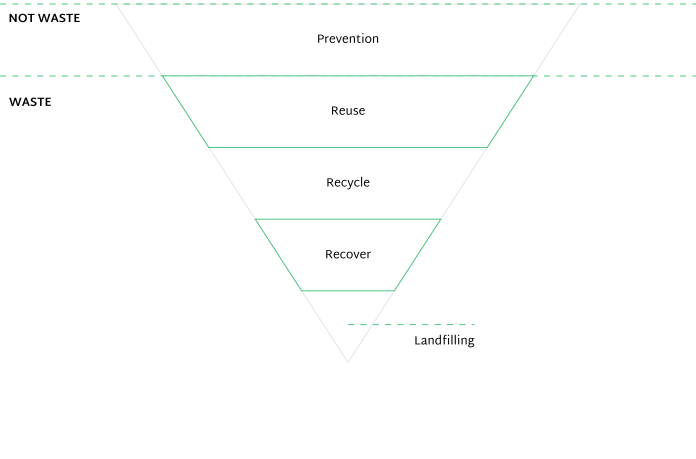
    tonnes of waste generated and managed
  • 6.605
    tonnes sent for recovery operations
  • 58.896
    tonnes of raw materials purchased

Material Topics

Careful and efficient use of resources is essential to improve the quality of production processes and reduce environmental impacts. Through targeted measures and progressive actions, it is possible to initiate optimization pathways that promote more responsible and sustainable management over time.

  • Reduction of wooden packaging: Implementation of a returnable packaging management system with a specific supplier and sale of packaging that was deemed suitable for reuse.
  • Plastic recovery: Separate collection of high-quality plastic generated by the production process directly in assembly areas and its subsequent recovery.
  • Valorization of metal scrap: Metal chips generated by Streparava’s production process are reintroduced into the foundry industrial cycle as secondary raw material, thanks to collaboration with a Group supplier and its subsidiary specializing in the treatment of ferrous scrap.
  • Smoker point Re-Cig:: Installation of smoker points to collect cigarette butts and transform the waste into new material (Re-CA® cellulose acetate). In 2025, the initiative was also extended to the BPT, SPT and SMT plants, strengthening the Group’s contribution to reducing one of the types of waste most commonly dispersed into the environment.


we are progressively increasing our use of renewable energy sources, both through self-generation and certified supply contracts. The Group’s photovoltaic systems, installed at the Streparava Spa and Streparava SMT facilities, have produced a total of 3,386 MWh of electricity in 2025.

A careful and efficient use of resources is essential to improve the quality of production processes and reduce environmental impacts. Through targeted interventions and gradual actions, it is possible to initiate optimization paths that promote more responsible and sustainable management over time.

ICOPOWER: an electrical device designed to improve the energy efficiency of industrial plants. It acts on the quality of electrical energy by reducing losses caused by dispersion, non-linear loads, and reactive components.

In 2024 we initiated a structured process to assess greenhouse gas (GHG) emissions through the compilation of the first GHG inventory. This activity made it possible to map and understand the main emission sources for all facilities, laying the foundations for the development of effective mitigation and reduction strategies, both in the short and long term.

    • Scope 1: direct emissions, arising from sources owned or controlled by the organization. These include both stationary sources (such as boilers and heating systems) and mobile sources (company fleets).
    • Scope 2: indirect emissions associated with the generation of purchased electricity, heat, or steam consumed by the organization.
    • Scope 3: indirect emissions that occur along the entire value chain, upstream and downstream of the company’s activities.


The carbon footprint calculation was conducted in accordance with the most widely recognized international standards, in particular the Greenhouse Gas (GHG) Protocol and the UNI EN ISO 14064-1:2018 standard.